Tuesday, September 25, 2007
Laundry soap
I picked up one box of washing soda and 2 bars of Fels Naptha at one of the three QFC's near my apartment. Using the recipe posted previously, I made a double batch and stored it in a glass jar with a spoon for easy use. I'm currently testing the effectiveness by washing our sheets.
The process took maybe 5 minutes and I have enough laundry soap to last us quite a while.
If you don't want to make your own detergent, you can reuse the plastic container.


Toxic products
This information is from the Guide to Less Toxic Products:
Dioxins - You won't find dioxin listed on any label. It's formed as an accidental by-product of some manufacturing processes using chlorine, especially paper bleaching and the creation of plastic. Dioxin is one of the most powerful carcinogens known and accumulates in body fat. Mainstream deodorants and anti-bacterial soaps are suspect. Chlorine bleached tissues, toilet paper and cotton balls can contain dioxin. Plastic bottles may leach dioxin into creams, shampoos and other products we use daily.
Nonylphenols - This estrogen-mimicking chemical is a surfactant used for its detergent properties. It can be found in some plastics, as well as shaving creams, shampoos and hair colours. It can be created when certain chemicals commonly found in personal care products break down. Nonylphenols can be a component in polyvinyl chloride (PVC), a compound often found in acrylic nails. They are persistent in the environment and of such concern that many European countries are phasing them out. Some manufacturers have voluntarily discontinued their use.
Phthalates - Everyone in the general population is exposed to phthalates from one source or another. They are found in many products from plastics to shampoo. These hormone-disrupting chemicals are suspected of contaminating breast milk and causing damage to the kidneys, liver, lungs and reproductive organs. One type of phthalate, diethyl phthalate (DEP) is commonly found in fragrances and other personal care products. Phthalates are used to enhance fragrances, as solvents, and to denature alcohol. A study published in Environmental Health Perspectives (December 2002) found that DEP is damaging to the DNA of sperm in adult men at current levels of exposure. DNA damage to sperm can lead to infertility and may also be linked to miscarriages, birth defects, infertility and cancer in offspring. DEP is the phthalate found in the highest levels in humans. Recent product tests found the chemical in every fragrance tested in the United States. Manufacturers are not required to list phthalates on product labels, so they are difficult to avoid.
Bottles/NipplesHarmful materials: latex rubber, plastic, nitrosamines
Nipples for bottles are usually made of latex rubber or silicone. Latex rubber nipples can release nitrosamines, potent carcinogens, when babies suckle the nipple. They also tend to break down faster than silicone nipples, which can cause cracks where bacteria can hide.
A common plastic used in baby bottles is polycarbonate. In separate studies, the U.S. Food and Drug Administration, Consumers Union and researchers at Nagasaki University in Japan found that baby bottles made of polycarbonate plastic release a hormone-disrupting chemical, bisphenol-A, into infant formula during sterilization and heating on the stove-top. The Japanese scientists also found that used bottles leached up to nearly twice as much as new bottles. Other plastic bottles and plastic disposable bags for bottles may leach phthalates, another hormone disrupting chemical. Some plastic bottles have coloured designs on the inside of the bottle which can come off during heating.
Running low on household items
I ran out of dishwasher soap last night, and we're almost out of laundry soap.
Dishwasher soap
Mix and use per dishwasher load:
1 Tablespoon Borax
1 Tablespoon Baking soda
Powdered Laundry Detergent
1 Cup Grated Fels Naptha Soap
1/2 Cup Washing Soda
1/2 Cup Borax
For light load, use 1 tablespoon.
For heavy or heavily soiled load, use 2 tablespoons.
Ivory Soap, Deodorant Soap, and Beauty Bars can be substituted for the Fels Naptha Soap. Essential Oils can be added to soap for fragrance.
Borax and washing soda come in cardboard containers. The soap is probably packaged in plastic, but compared to the containers that most laundry detergent comes in, it's minimal. I'm going to test these out in the next few days.
We're also running low on liquid hand soap and regular dish soap. I can refill our bottle at Madison Market in their bulk section. I can also use bar soap for our hands (I still have quite a few bars leftover from my L'Occitane days). I've looked up homemade dish soap online, but most seem to require glycerin, which I believe comes in plastic bottles. Any ideas?
Friday, September 21, 2007
Awareness
A few other households have started "satellite" projects echoing our own. This is fantastic! Some are trying to eliminate all plastic, while others are cutting back on the excess.
I wanted to take a moment to write about awareness. Plastic isn't "bad". It's not "The Devil", not by a long shot. I, for one, embrace our evil plastic overlords. Plastic has been a major attribute to the successes in our scientific community and is one of the top contributors to the advancement of society.
I believe that there's an overuse of plastic in the United States. Americans want everything sterilized, and thus everything is wrapped in at least one layer of plastic. The point of this project is to become aware of how much plastic has seeped into our everyday lives.
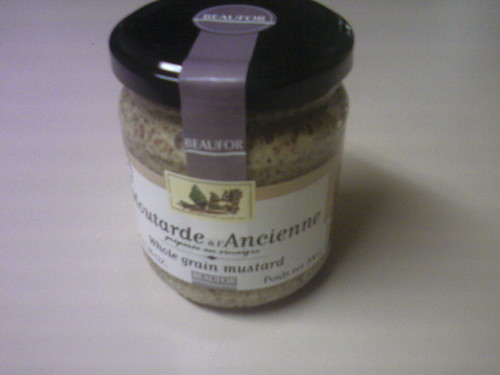
It's working. I can't help but notice plastic everywhere. Today, I tried to buy a jar of mustard. I'm making a potato salad for a party tomorrow, and it's just not right without a little stone ground mustard. I looked at the options available, instantly dismissing the plastic squeeze bottles. Looking at the jars with metal lids, I realized that even with a metal lid, 9/10 jars had a plastic shrink-wrapped seal "for freshness". The jar that I purchased (seen in the photo to the right) only has a strip of paper attached from the label to the lid. It was almost the only option. I've noticed this same use of a plastic seal on almost every product that is sold in a grocery store. Some I can understand, but 
Today marks the 11th day since we officially started this project. We've saved almost all of the plastic that we've bought, minus a plastic bag from a box of cereal and a juice bottle from my train ride. Pictured on the right: 2 boxes of wine (via Carl who very sneakily brought them home while I was visiting relatives), a plastic wrapper from the canning pot, a plastic cover for a candle (Carl turns 30 this weekend), two bags that held streamers (a frivolous purchase), a plastic seal for something, a pizza box insert (which our friend Mike actually paid for), a plastic tag for cilantro, and two plastic tags for green onions.
I listed this out to show how easily one can eliminate a lot of excess plastic from their daily lives. I scan the groceries of the people ahead of me in line at the grocery store and some have plastic wrappers on everything they are buying!
Tuesday, September 18, 2007
Back from vacation

I had a great time in Oregon. I managed to avoid buying plastic until I was on the train home. I really needed something to drink and the water on the train tasted
funky. I opted to buy an orange juice, which conveniently comes in a plastic bottle! After I finished the juice, I could find no place on the train to recycle the bottle. I had to either throw it in the trash or find room in my overly-packed bags (thanks to a visit to the used bookstore in Eugene). I checked Amtrak's website and found a form to leave a comment.
I recently traveled with Amtrak from Seattle, WA to Eugene, OR. On my return trip, I noticed that Amtrak does not provide recycling receptacles for cans, bottles, and/or plastic. Has Amtrak considered providing recycling receptacles and if so, when will this service be available? Thank you.
We'll see if they respond. Honestly I doubt that they have given much thought to providing recycle bins onboard, as the trains are pretty cramped as it is.
Thursday, September 13, 2007
Vacation
I'm heading down to Eugene, Oregon tomorrow on the train and just realized that I have nothing suitable at home to take for food. If I had planned ahead, I could have picked up some bread, made a sandwich, then packed it with carrots and celery to eat. The likelihood of finding food not packaged in plastic is pretty low, especially on the train. Also, the likelihood of finding non-junk food is pretty low as well. I think this means I'll have to walk to the store before going to bed in order to pick up some bread.
This situation is one that I suspected would happen at some point during the experiment.
Tuesday, September 11, 2007
Polyerethane
Via Wikipedia
Over three quarters of the global consumption of polyurethane products is in the form of foams, with flexible and rigid types being roughly equal in market size. In both cases, the foam is usually behind other materials: flexible foams are behind upholstery fabrics in commercial and domestic furniture; rigid foams are inside the metal and plastic walls of most refrigerators and freezers, or behind paper, metals and other surface materials in the case of thermal insulation panels in the construction sector. Its use in garments is growing: for example, in lining the cups of brassieres. Polyurethane is also used for moldings which include door frames, columns, balusters, window headers, pediments, medallions and rosettes.
- Polyurethane materials are commonly formulated as paints and varnishes for finishing coats to protect or seal wood.
- Polyurethane is also used in making solid tires. Modern roller blading and skateboarding became economical only with the introduction of tough, abrasion-resistant polyurethane parts.
- Polyurethane is also used in furniture manufacture for casting soft edges around table tops and panel that are stylish, very durable and prevent injury. These are used in school tables, hospital and bank furniture as well as shop counters and displays.
- Much of the foam used in chairs, couches, Comfy Sacks and mattresses is polyurethane foam.
- Flexible and semi-flexible polyurethane foams are used extensively for interior components of automobiles, in seats, headrests, armrests, roof liners and instrument panels.
- Polyurethane has been used to make several Tennis Overgrips such as Yonex Supergrap, Wilson Pro Overgrip and many other grips.
- Often electronic components are protected from environmental influence and mechanical shock by enclosing them in polyurethane.
- Polyurethane is used as an adhesive, especially as a woodworking glue.
- Polyurethane is used as a black wrapping for timepiece bracelets over the main material which is generally stainless steel. It is used for comfort, style, and durability.
- Gorilla Glue
After a period of 700 days, no aromatic amines were detected using gas chromatography mass spectroscopy, according to William E. Brown, who headed the study. Nor was any physical breakdown of the polyurethane foam cubes evident from visual inspection after the buckets were taken apart following the experiment.
Today's summary: I bought two kinds of tea at Vital Tea Leaf: one came in foil, the other in plastic (which mimicked the foil packaging). I bought a pound of chicken and a pound of bacon, both of which were wrapped only in paper.
Monday, September 10, 2007
The history of plastic
The early years:
- The first man-made plastic was unveiled by Alexander Parkes at the 1862 Great International Exhibition in London. Created to replace rubber at a lower cost.
- John Wesley Hyatt invented celluloid in 1869. Created to replace ivory in billiard balls.
- The first completely synthetic man-made substance was discovered in 1907, when Leo Baekeland, a New York chemist, developed a liquid resin that he named Bakelite. Various uses include: weaponry, lightweight war machinery, and is currently a still produced.
- 1872 - Polyvinyl Chloride or PVC - first created by Eugen Baumann.
- 1894, British inventors, Charles Cross, Edward Bevan, and Clayton Beadle, patented a safe a practical method of making viscose rayon. Created specifically to be artificial silk.
- Cellophane was created in 1908 by Dr. Jacques Edwin Brandenberger. Created to make waterproof tablecloths.
- 1926 - Vinyl or PVC - Walter Semon invented a plasticized PVC. Semon accidentally created this when attempting to bind rubber to metal.
- 1933 - Polyvinylidene chloride or Saran also called PVDC - accidentally discovered by Ralph Wiley, a Dow Chemical lab worker. First created to protect military equipment.
- Also produced in 1933 by Imperial Chemical Industries: Low Density Polyethylene. Used in six-pack soda can rings, extrusion coating on paperboard and aluminum laminated for beverage cartons, computer components, such as hard drives, screen cards and disk-drives. (I guess this means that I'm buying plastic whenever I pick up a carton of milk, right? More on this another day.)
- Otto Bayer and co-workers discovered and patented the chemistry of polyurethanes in 1937. Today, polyethylene is used to make such common items as soda bottles, milk jugs and grocery and dry-cleaning bags in addition to plastic food storage containers.
- A DuPont chemist named Roy Plunkett discovered Teflon®, in 1938. Current studies show Teflon can cause cancer and other ailments in humans.
- Two of the 20th century's most widely used synthetic polymers—neoprene and nylon—originated in 1939 in the research laboratory of Wallace Hume Carothers (1896–1937) at the DuPont Company. Nylon is also used in parachutes and ropes.
- Unsaturated Polyester also called PET patented by John Rex Whinfield and James Tennant Dickson in 1942. No, this isn't responsible for the awful clothes of the 70's. PET is used for engine parts, covers, electrical terminal boxes, swimming pools, and boats.
- Silly Putty commercialized by Peter Hodgson in 1949. Named because of its main ingredient, silicone.
- 1951 - High-density polyethylene or HDPE tradenamed Marlex - Paul Hogan and Robert Banks. Tupperware, milk jugs, plastic bags, pipes for water and gas (domestic), and used to line landfills.
- 1955: Velcro, made from nylon, is patented. George de Mestral came up with the idea for Velcro after pulling burrs from his socks.
- Polymides are introduced in 1955. They are used in the construction of many appliances as well as microwave cookware and food packaging because of their thermal stability, resistance to oils, greases, and fats, and their transparency to microwave radiation.
- 1978 - Linear Low Density Polyethylene. Used for industrial containers and trash cans.
- Liquid Crystal Polymers in 1985. A million uses.
First official day
We chose today to be our first official day without plastic. For 30 days, we will avoid buying plastic in any form. The "rules" are as follows:
- Avoid purchasing plastic as much as possible
- We can use plastic that we already have, such as produce bags
- Any plastic we bring home will be added to a pile, which we will document at the end of the project
- This project should not impact our normal lives much
The first impression so far is that we really need to plan ahead before we can buy groceries. While shopping, I need to examine packaging. I'm going to buy fresh meat tomorrow at Pike Place Market (we missed going there on Sunday), so I have to plan ahead for that specifically and be prepared to visit more than one meat stand in order to avoid plastic.
Somehow I get the feeling that we're cheating a bit. We currently live on one-income while I attend school full time, so we had cut out most of the unnecessary consumer-activities that we Americans seem so keen on. Looking ahead, I am going to buy textbooks in the next two weeks. They come shrink-wrapped in plastic for new, so I'll need to pick up used (which is better for the wallet anyway). I need new contacts, which come in individual plastic compartments.
Summary for today: I bought fresh bread in a paper bag (without a plastic window), peanut butter in a jar with a metal lid, milk and cream in paper cartons, and oregano in a personal Ziploc bag. I was at the last stage of a batch of homemade tomato sauce and found that our pot was not deep enough to properly seal the quart-size jars. Carl brought home a canning pot that was wrapped in plastic (which is the start of our "pile"). So far, decent but not 100%.
Saturday, September 8, 2007
Shopping at the farmers market
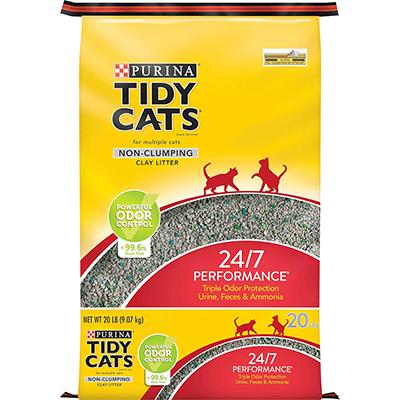
First, a quick story about product packaging. Normally we purchase Tidy Cat litter in the large plastic bucket. Trying to avoid the plastic, we checked for the same brand in a bag. Safeway had a 20lb bucket for $8.99 on sale vs. 20lbs in a bag for $4.99. The exact same product, just priced differently for different packages. Ridiculous. We grabbed the bag, only to see that the bag material is woven plastic. *sighs* We just can't win.
We also purchased a dozen quart-size jars for canning which came wrapped in plastic, and a tube of toothpaste. The jars are for our own spaghetti sauce, and will be reused for years to come. The toothpaste comes in a foil tube but the cap is definitely plastic. Is there any toothpaste that comes without plastic? Can we actually make our own toothpaste?
Carl and I drove out to the Redmond Saturday Market. We used our own bags to pick up 10lbs of apples, 4 huge onions, carrots, peppers, and basil. One stand loaned us two large boxes to carry the 23lbs of tomatoes we purchased, as long as we promised to bring them back next weekend.
Each stand we stopped at had plastic produce bags for consumers to use. I found it odd th
I also wanted to pick up a bouquet of flowers, but each bunch comes with a plastic bag strapped to the stems to hold water. While we would reuse the bag, I don't need flowers that much. Our cat will also just knock the vase over when we aren't looking, which is annoying to clean up. We do have 3 small vases that hang on the wall. I could possibly pick out a few individual stems of flowers sans plastic bag and arrange them myself.
Tomorrow, we plan on busing down to Pike Place Market. (Normally, we would walk the 2 miles down the hill, but my knee is still swollen.) We need to pick up some ginseng tea, a glass jar of honey, and I want to check with the butchers about either bringing my own plastic or if they will just wrap their product in paper.
Subscribe to:
Posts (Atom)